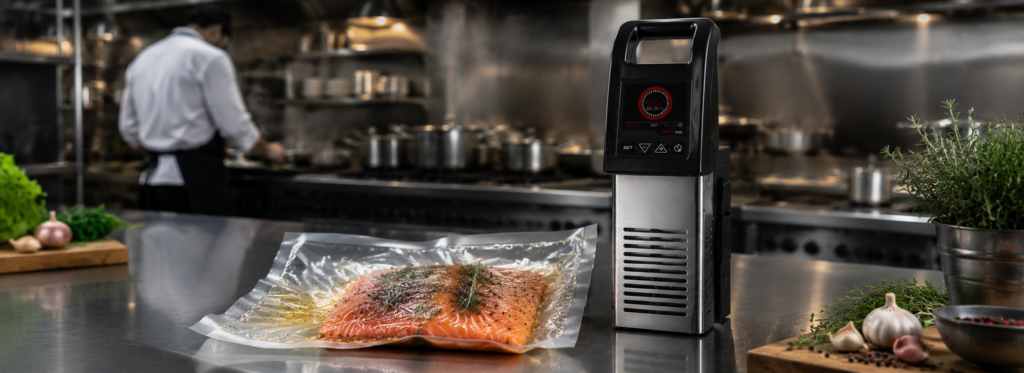
Sous vide cooking has become one of the most valuable techniques in modern professional kitchens.
Once reserved for fine dining restaurants, it is now widely used by hotels, gastropubs, catering companies, restaurants and food production businesses looking to improve consistency, reduce waste and optimise kitchen workflow.
By combining vacuum sealing with precisely controlled temperatures, chefs can achieve exceptional texture, retain moisture and deliver the same high-quality result every time.
What Is Sous Vide?
Sous vide, meaning “under vacuum” in French, involves sealing food inside specially designed vacuum pouches before cooking it slowly at a precisely controlled temperature.
Unlike conventional cooking methods, the food never exceeds the target temperature.
This results in:
- perfectly even cooking;
- improved tenderness;
- minimal moisture loss;
- enhanced flavour retention.
Why Restaurants Use Sous Vide
Professional kitchens are constantly searching for methods that improve both quality and efficiency.
Sous vide offers several operational advantages.
Consistency
Every portion reaches exactly the same level of doneness.
Better Yield
Less cooking loss means higher product yield and improved food cost control.
Kitchen Organisation
Large batches can be prepared in advance, chilled safely and regenerated during service.
Reduced Waste
Improved shelf life and portion control help minimise unnecessary food waste.
Essential Equipment
Professional sous vide cooking requires more than a vacuum bag.
A complete setup generally includes:
- commercial chamber vacuum sealer;
- sous vide water bath;
- blast chiller;
- food-grade vacuum pouches;
- accurate temperature monitoring.
Choosing reliable equipment is essential for both food quality and food safety.
Food Safety
Because sous vide operates at relatively low temperatures, strict food safety procedures must always be followed.
Professional kitchens should ensure:
- correct vacuum sealing;
- accurate cooking temperatures;
- rapid chilling when food is stored;
- proper refrigerated storage;
- safe regeneration before service.
Following HACCP principles is essential when working with vacuum-packed products.
Common Mistakes
Some of the most frequent mistakes include:
- using domestic vacuum sealers for heavy commercial use;
- selecting unsuitable vacuum bags;
- poor temperature control;
- inadequate chilling after cooking;
- overloading the water bath.
Avoiding these issues helps maintain consistent quality and extends equipment lifespan.
Expert Tip
If sous vide is part of your daily production, investing in a commercial chamber vacuum sealer is usually more efficient than relying on external suction models.
It provides stronger vacuum performance, handles liquids with ease and significantly improves production speed.
Conclusion
Sous vide cooking is no longer considered an advanced culinary trend.
It has become a practical solution for professional kitchens seeking consistency, efficiency and exceptional product quality.
When combined with the right equipment and proper food safety procedures, it allows chefs to simplify service while maintaining premium standards.
Explore our range of professional sous vide equipment and discover reliable solutions designed for restaurants, hotels, catering businesses and commercial kitchens.
From chamber vacuum sealers to blast chillers, we provide equipment that helps chefs achieve consistent, high-quality results every day.
Sull'autore