Professional kitchens are constantly searching for speed and efficiency. Yet some of the most commercially interesting dishes of the colder season require exactly the opposite: time. Braised meats and slow-cooked preparations show why efficiency does not always mean cooking faster.
The modern professional kitchen is obsessed with minutes.
Preparation time.
Cooking time.
Ticket time.
Table turnover.
Labour time.
It is therefore interesting that some dishes requiring hours rather than minutes continue to occupy an important place on restaurant menus.
Braised beef is a perfect example.
Its continued relevance reveals an important truth:
a long process is not necessarily an inefficient process.
Time can be part of the technique
Slow cooking should not be confused with simply leaving food on heat for a long period.
The result depends on the interaction between variables such as:
- cut;
- product size;
- cooking medium;
- temperature;
- time;
- recipe;
- equipment;
- desired final texture.
The chef must understand how these factors work together.
Why braising suits autumn and winter
As temperatures fall, diners often become more receptive to richer and warmer dishes.
Braised meats, stews and similar preparations fit naturally into this seasonal shift.
Wine, mushrooms, root vegetables, herbs and rich sauces create a flavour profile strongly associated with autumn and winter.
But seasonality is only part of the reason these dishes remain attractive.
They can also offer interesting possibilities for kitchen organisation.
Long cooking does not have to happen during service
This is the operational advantage that changes the discussion.
A dish may require several hours of preparation and still place relatively little pressure on the à la minute service — if production is correctly planned and the subsequent handling is compatible with the kitchen’s established procedures.
The key question is therefore not simply:
“How long does it take?”
It is:
“When does that work take place?”
Moving labour and equipment demand away from peak service can be extremely valuable.
Where the professional bratt pan fits
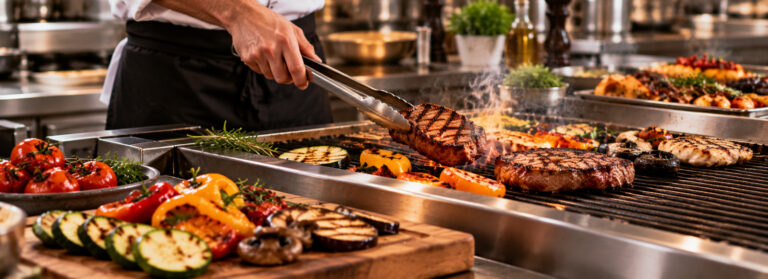
A professional bratt pan, depending on its design and specifications, can support a range of production tasks in commercial kitchens.
Its value should be assessed according to the menu and actual production volume.
Capacity is particularly important.
A machine that is too small may require repeated batches.
One that is substantially oversized may consume valuable space and represent unnecessary investment.
Again, the correct size comes from understanding peak production.
The hidden advantage: batch organisation
Slow-cooked dishes naturally encourage chefs to think in batches.
Batch production can help a kitchen standardise:
- recipe quantities;
- portion yields;
- seasoning;
- cooking procedures;
- final presentation.
This does not mean every restaurant should adopt the same production system.
It means slow cooking can be structured rather than improvised.
Wine as a cooking ingredient
Red wine is particularly associated with braised dishes.
Its role is not simply to make a dish “taste of wine.”
It becomes part of a broader cooking environment involving meat, aromatics and the other components of the recipe.
What matters is balance.
A successful braise should not feel like a collection of separate ingredients.
The cooking process should bring them together.
Sauce is part of the value
One of the most important elements of a braised dish is often what surrounds the meat.
The cooking medium can contribute to the final sauce or jus according to the recipe and process used.
This means the dish can generate layers of flavour through the same production sequence.
From a culinary perspective, this is one reason braising remains so relevant.
It transforms both the main ingredient and its accompanying liquid.
Consistency still matters
A romantic view of slow cooking sometimes suggests that the dish simply “looks after itself.”
Professional production does not work that way.
A restaurant still needs defined quantities, procedures and expected results.
If the same braised dish is served throughout the week, customers should not encounter dramatically different portions or textures depending on who prepared it.
Tradition and standardisation are not enemies.
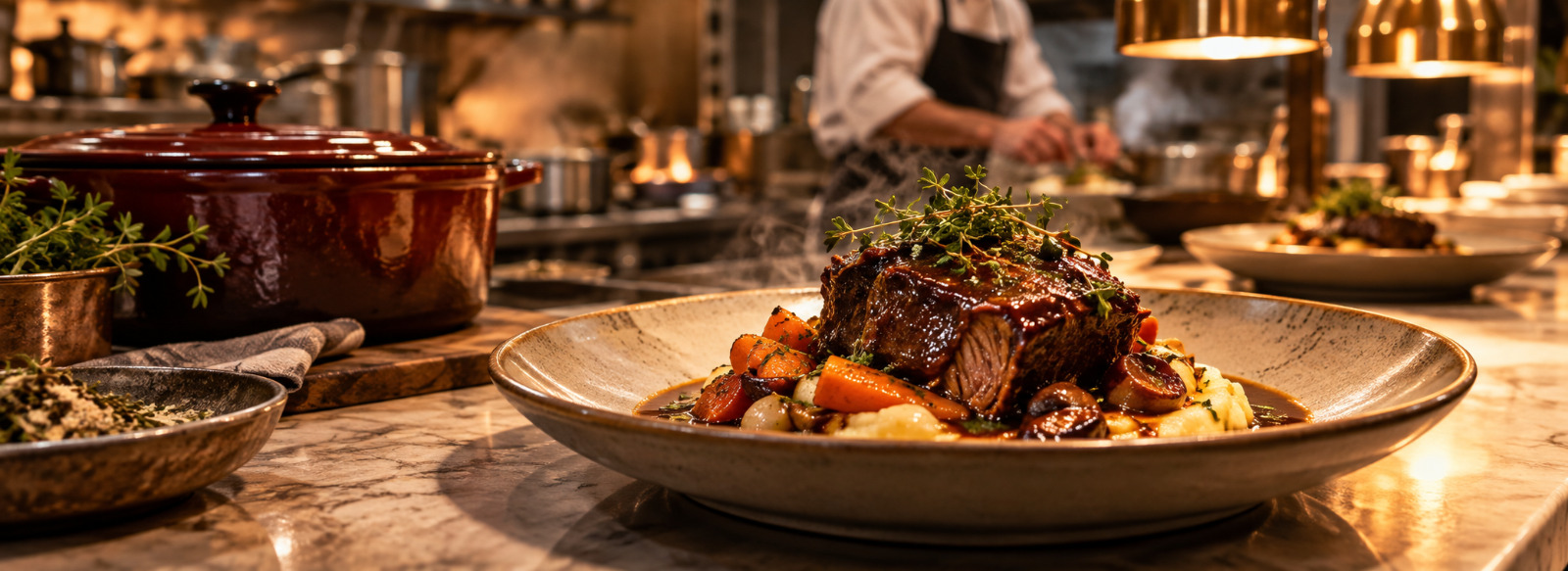
Chef Costantino’s autumn interpretation
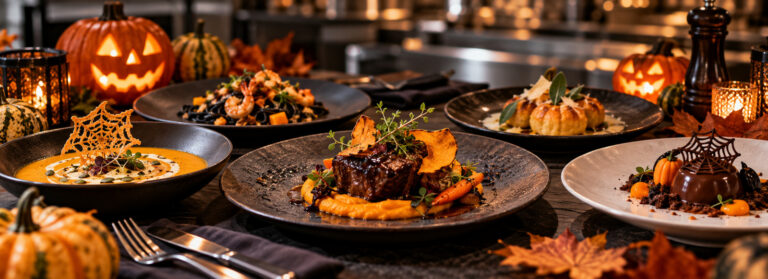
Red Wine Braised Beef Cheek with Reduced Jus and Potato Purée
The dish combines several elements associated with colder-season cooking:
slow-cooked meat, red wine, a concentrated sauce and a smooth potato component.
It also demonstrates the organisational logic behind this style of cooking.
The final plate may be assembled in minutes.
The work behind it began much earlier.
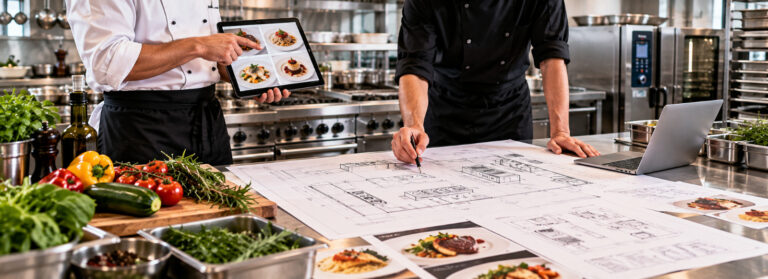
Efficiency should be measured across the whole process
This is perhaps the most important lesson slow cooking offers modern kitchens.
A preparation that takes hours can still be operationally efficient if those hours are correctly planned.
Conversely, a dish that cooks in minutes can be inefficient if it creates an unmanageable bottleneck during peak service.
Professional kitchens should therefore evaluate workflow, not just cooking time.
And this is where equipment selection becomes relevant.
The best machine is not necessarily the one that cooks fastest.
It is the one that supports the production model the kitchen has chosen.
Professional equipment focus: commercial bratt pans and professional cooking equipment appropriate to the production process.
TAGS
professional bratt pan, commercial bratt pan, braised beef, beef cheek, slow cooking, red wine braise, autumn restaurant menu, winter restaurant menu, batch cooking, professional cooking equipment, restaurant kitchen, foodservice equipment, HoReCa
Sull'autore