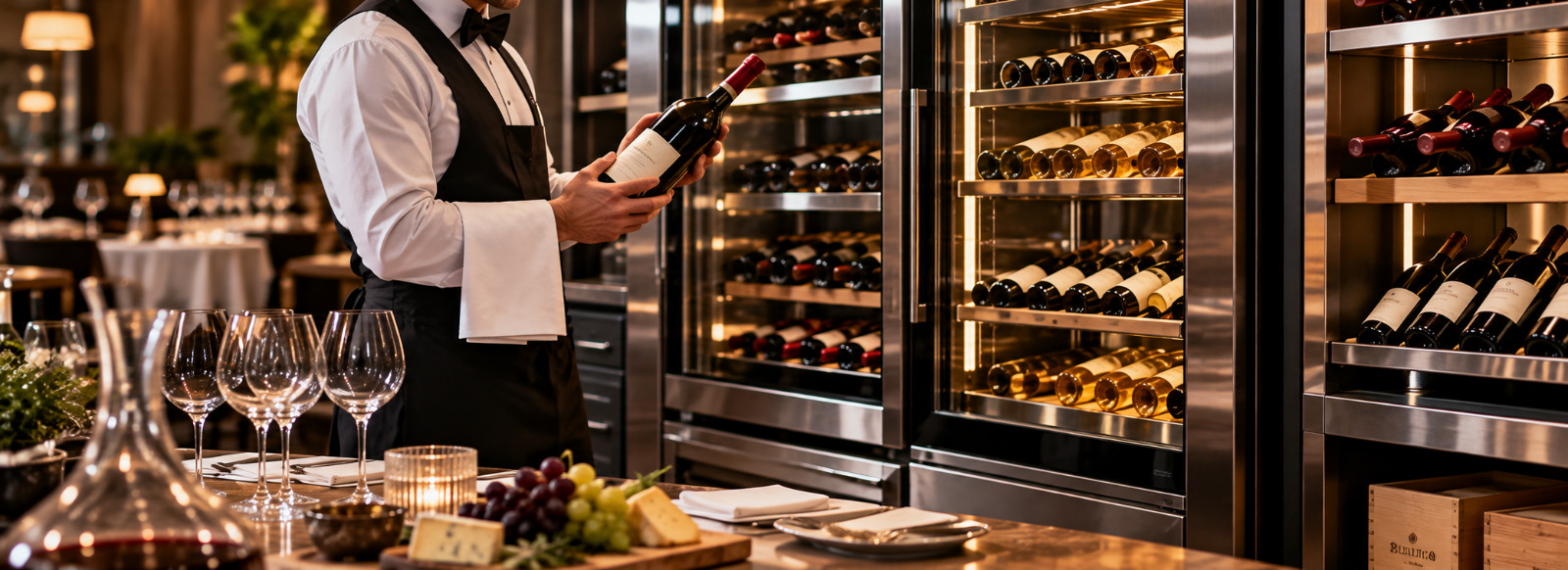
Guests see the wine list, the bottle and the glass. They rarely see what happens before service: purchasing, stock rotation, organisation and storage. Yet these invisible decisions can determine how efficiently a restaurant manages one of its most valuable inventories.
A bottle may be selected by a guest in less than a minute.
The restaurant may have been managing that same bottle for weeks or months.
This difference in timescale explains why wine requires a different kind of operational thinking.
Wine service does not begin with the corkscrew.
It begins with the cellar.
A larger wine list creates a larger logistics problem
Expanding a wine programme can strengthen a restaurant’s identity.
But every additional reference also creates operational requirements.
The business needs to know:
- where bottles are stored;
- how stock is organised;
- how quickly each reference moves;
- how bottles are located during service;
- which products require particular storage conditions;
- how much capital is held in inventory.
A wine list is therefore simultaneously a hospitality tool and an inventory-management system.
Storage and service are different objectives
Not every bottle has the same operational purpose.
Some wines may rotate rapidly.
Others may remain in stock for longer periods.
Some equipment may be designed primarily around service requirements, while other solutions may have different intended functions.
For this reason, not every professional wine cabinet should automatically be assumed suitable for long-term wine maturation.
The equipment’s specifications and intended use matter.
Bottle capacity needs interpretation
A cabinet advertised with a particular bottle capacity gives the buyer a useful reference.
But real-world capacity may vary according to factors such as:
- bottle shape;
- bottle dimensions;
- shelf arrangement;
- internal configuration.
A collection dominated by standard Bordeaux-style bottles may occupy space differently from one containing Champagne bottles or other formats.
The nominal figure therefore needs context.
One temperature zone or several?
Some professional wine cabinets provide multiple temperature zones; others use a different configuration.
More zones do not automatically mean a better cabinet.
The relevant question is whether the restaurant actually needs them.
A compact wine list may have relatively straightforward requirements.
A broader programme with different service needs may benefit from a different solution.
Again, the wine programme should determine the equipment.
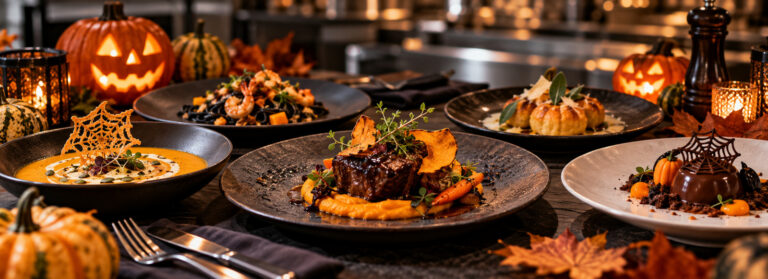
Autumn can change the wine list
Seasonality is usually discussed in relation to food.
But when the menu changes, wine pairings may change with it.
Autumn brings dishes built around:
- mushrooms;
- truffle;
- braised meats;
- richer sauces;
- aged cheeses;
- roasted ingredients.
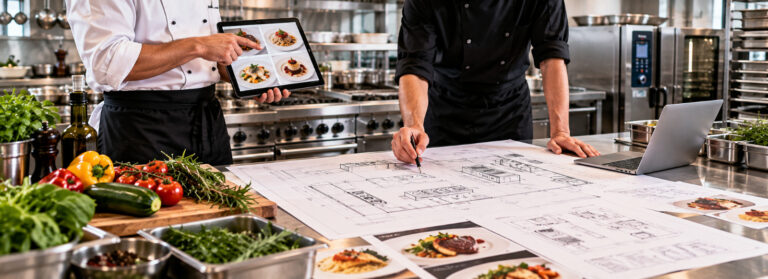
This may create an opportunity to review the wine list alongside the kitchen menu.
Food and wine should not operate as two independent departments.
The most coherent restaurant concepts allow them to communicate.
Organisation becomes critical during service
Imagine a busy Saturday night.
A guest orders a particular bottle.
A member of staff leaves the dining room and spends several minutes searching through poorly organised stock.
The storage system has now affected service.
A well-organised wine area should make commonly required bottles easy to identify and access according to the business’s operating system.
The objective is not simply to store wine.
It is to make wine operationally manageable.
Inventory value deserves attention
Wine can represent a significant financial investment.
Unlike many kitchen ingredients, certain bottles may remain in inventory for an extended period.
This means the restaurant should understand what it holds.
Stock management can help identify:
- slow-moving references;
- fast sellers;
- purchasing needs;
- excessive stock;
- gaps in the list.
The physical storage system and the inventory-management process should support each other.
Visibility can become part of the experience
In some restaurants and wine bars, the wine cabinet is deliberately visible to guests.
In this case, storage becomes part of interior presentation.
An organised collection can reinforce the identity of the venue.
The equipment therefore has two roles:
functional and visual.
But visual impact should never replace suitability for the intended use.
Choosing equipment starts with the wine programme
Before selecting a cabinet, operators should consider:
- number of references;
- approximate bottle quantity;
- bottle formats;
- stock rotation;
- intended use;
- available space;
- service organisation;
- equipment specifications.
Starting with these questions makes it easier to interpret technical data correctly.
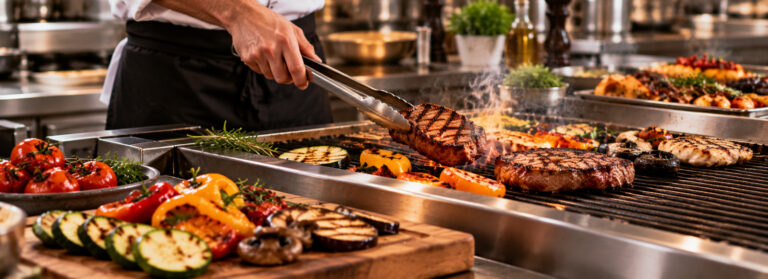
Chef Costantino’s autumn interpretation
Beef Fillet with Red Wine and Porcini Mushrooms
The recipe creates an obvious bridge between kitchen and cellar.
Red wine appears within the culinary narrative while porcini reinforce the autumn character.
It is also a reminder that wine should not be treated as an isolated category.
It belongs to the wider dining experience.
A bottle begins creating value before it is opened
Professional wine management is not only about serving temperature or choosing attractive glassware.
It includes purchasing, organisation, stock rotation, accessibility and appropriate storage.
The guest sees the final few minutes.
The restaurant manages everything that came before.
And that invisible work is often what makes professional wine service feel effortless.
Professional equipment focus: commercial wine cabinets and professional wine-storage equipment selected according to intended use.
TAGS
professional wine cabinet, commercial wine cooler, restaurant wine storage, wine service, restaurant wine list, wine inventory, wine bar equipment, hotel wine storage, professional restaurant equipment, foodservice equipment, HoReCa
Sull'autore