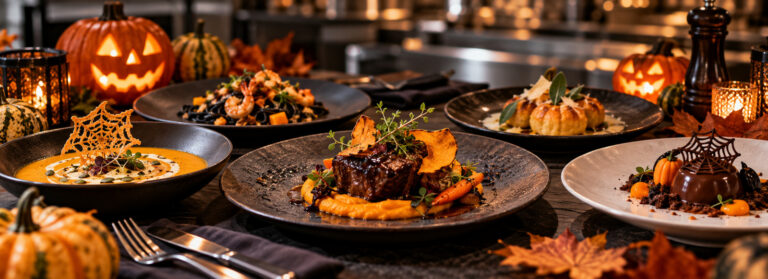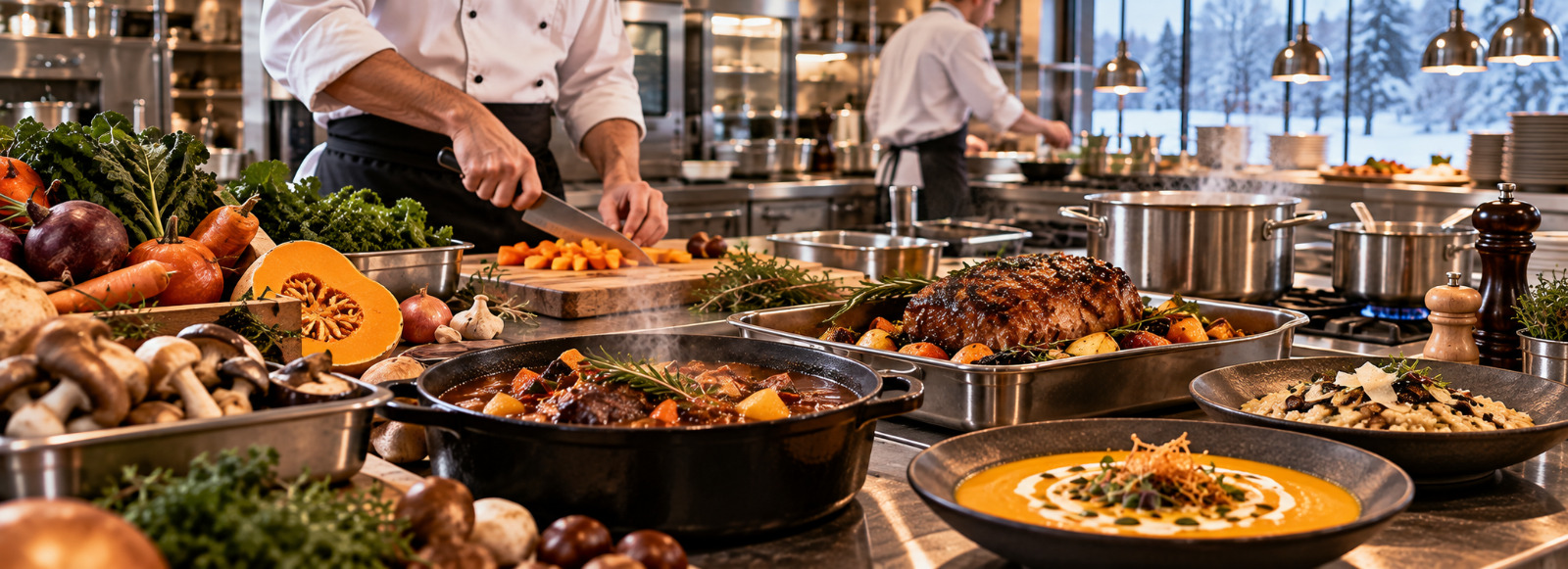
A pumpkin can be roasted, puréed, blended into a cream, transformed into a filling or used as the base of a delicate flan. The ingredient remains the same, yet the dining experience changes completely. In modern professional cooking, texture has become a culinary language of its own.
When chefs discuss creativity, attention often goes immediately to ingredients.
Which variety?
Which origin?
Which season?
Which combination?
Yet one of the most powerful tools available to a chef has nothing to do with introducing another ingredient.
It is changing the physical structure of the ingredient already on the plate.
A mushroom served whole creates one experience. A mushroom cream creates another. A smooth vegetable purée behaves differently from roasted pieces of the same vegetable.
The flavour may begin in the same place, but texture changes how the diner experiences it.
Texture influences how we perceive food
Eating is a multisensory experience.
Flavour and aroma are fundamental, but so are:
- smoothness;
- crunch;
- density;
- viscosity;
- temperature;
- resistance to the bite.
This explains why many successful dishes are constructed around contrast.
A smooth cream may be paired with toasted nuts.
A soft filling can be wrapped in pasta.
A delicate flan can be served with a crunchy garnish.
The contrast gives the mouth something to explore.
One ingredient can perform several roles
Consider pumpkin, one of autumn’s most recognisable ingredients.
It can become:
- roasted garnish;
- soup;
- purée;
- ravioli filling;
- flan;
- sauce;
- cream.
The ingredient has not changed.
The technique has.
This is an important principle for restaurants trying to develop seasonal menus without creating an unnecessarily large inventory.
The same raw material can appear in several preparations when technique gives it different functions.
Why consistency matters professionally
At home, a slightly different texture from one preparation to another may not be important.
In a restaurant, repeatability matters.
If a sauce is smooth on Tuesday and noticeably coarse on Saturday, the customer experience has changed.
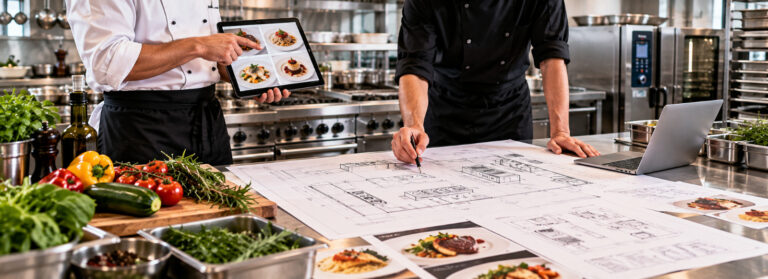
Professional kitchens therefore need to control not only ingredients but processes.
This may include:
- quantity;
- processing time;
- product temperature;
- batch size;
- sequence of ingredients;
- equipment used.
The recipe becomes a production standard.
Where the professional bowl cutter fits
A commercial bowl cutter, depending on its design and intended use, can support different food-preparation processes.
Typically, the product is worked inside a bowl through the action of rotating blades.
The exact result depends on several variables, including the product, quantity, processing time and machine characteristics.
It is therefore incorrect to think of the cutter as a machine that automatically produces one predetermined texture.
It is a tool.
The chef still defines the objective.
Bowl cutter and vegetable cutter: similar names, different jobs
These two machines are sometimes confused.
A vegetable cutter generally uses compatible discs or cutting systems to create defined cuts or shapes.
A bowl cutter works differently, processing the product inside its bowl.
The distinction becomes easier to understand if we think about the desired result.
If the objective is a repeatable slice, a vegetable-cutting system may be relevant.
If the objective is to transform the structure of a preparation, a bowl cutter may be the more appropriate category.
Professional kitchens may therefore use both machines for completely different tasks.
Bowl capacity needs context
Technical specifications often state bowl volume.
That figure is useful, but it should not automatically be interpreted as the usable quantity for every recipe.
Different products behave differently during processing.
The correct operating quantity should follow the machine’s specifications and the requirements of the preparation.
This is another example of why professional equipment cannot be selected by reading a single number.
Temperature can become part of the process
Mechanical processing can influence product temperature.
Depending on the recipe, this may matter.
The kitchen should therefore monitor the preparation according to the process being performed rather than assuming that texture is the only variable.
Professional production means understanding what happens to the food throughout the entire operation.
Cleaning is part of productivity
A machine may process food quickly and still be inefficient if cleaning creates excessive downtime.
When evaluating a cutter, professional operators should therefore consider not only processing performance but also:
- accessibility;
- removable components where provided;
- cleaning procedure;
- changeover between preparations;
- allergen-management requirements.
The time between two batches is part of production.
Autumn is a season built for texture
Pumpkin, mushrooms, chestnuts and aged cheeses naturally lend themselves to creams, fillings and smooth preparations.
Their softer, warmer sensory profile also fits the way many customers expect autumn food to feel.
But softness alone can become monotonous.
This is where contrast becomes important.
Nuts.
Toasted seeds.
Croutons.
Crisp vegetables.
A successful autumn dish can therefore be designed almost like a composition of textures.
Chef Costantino’s seasonal interpretation
Pumpkin Flan with Parmesan Fondue and Toasted Hazelnuts
The concept is built around three distinct sensations.
The pumpkin flan provides softness.
The Parmesan fondue adds richness and creaminess.
The toasted hazelnuts introduce crunch.
The ingredients matter, but the real architecture of the dish comes from texture.
Technology does not replace culinary judgement
A cutter can process an ingredient.
It cannot decide whether the result is right for the dish.
That remains the chef’s responsibility.
This is the correct relationship between professional equipment and culinary creativity:
the chef defines the texture; the machine helps reproduce it.
Professional equipment focus: commercial bowl cutters and professional food-preparation equipment.
TAGS
commercial bowl cutter, professional bowl cutter, food processor, food preparation equipment, culinary texture, sauces, fillings, vegetable cream, pumpkin flan, professional kitchen, restaurant equipment, foodservice equipment, HoReCa
Sull'autore