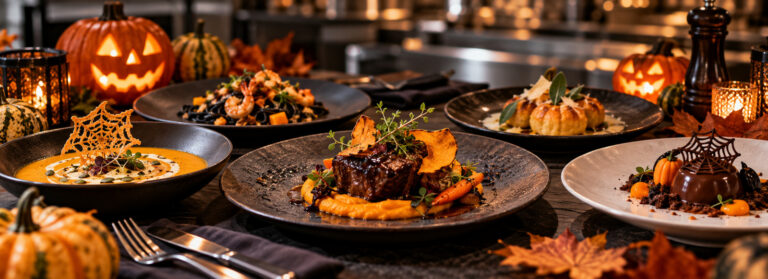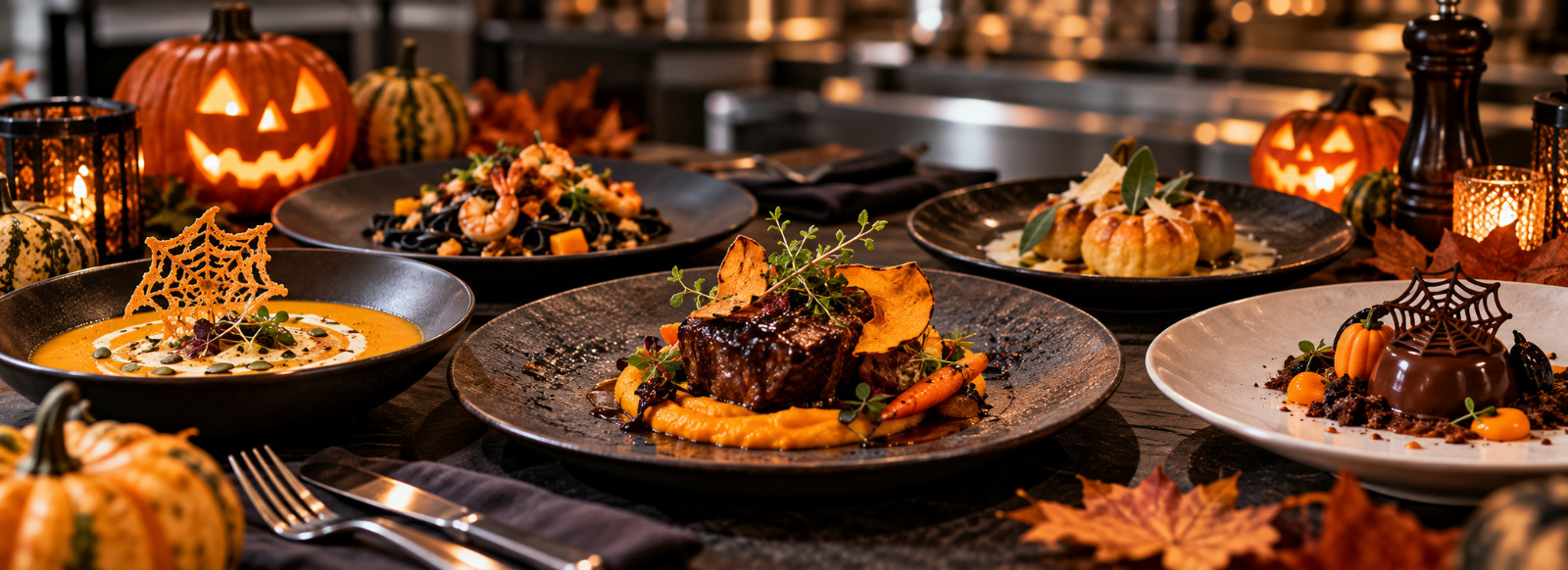
Pumpkin, chestnuts, dark chocolate, mushrooms, herbs and red wine already provide much of the colour and atmosphere associated with Halloween. For restaurants, the strongest seasonal menu may therefore be the one that starts with autumn ingredients rather than artificial effects.
Halloween creates an interesting challenge for chefs.
The event is highly visual.
Customers expect atmosphere.
Social media rewards unusual presentation.
Restaurants may therefore feel pressure to make food look increasingly theatrical.
But there is a point at which the theme begins to overpower the dish.
A useful question can keep the menu grounded:
Would this still be a good dish if Halloween disappeared tomorrow?
If the answer is yes, the concept probably has a strong culinary foundation.
Autumn already provides the colour palette
Pumpkin gives orange.
Dark chocolate and cocoa provide deep brown tones.
Beetroot can introduce intense red and purple shades.
Herbs provide green.
Mushrooms bring earthy colours.
Red wine contributes depth.
Chestnuts immediately communicate the season.
A chef therefore has many ways to create a Halloween atmosphere using ingredients that already belong to autumn cooking.
A Halloween menu does not need to look childish
Different businesses serve different audiences.
A family venue may intentionally choose playful presentation.
A fine-dining restaurant may want something completely different.
Halloween can be expressed through:
- ingredients;
- menu names;
- lighting;
- plating;
- seasonal colours;
- table presentation;
- communication.
The theme can be subtle.
Build the menu as a progression
A coherent Halloween menu might include:
Starter: pumpkin flan with a savoury cream and crunchy element.
First course: pumpkin and amaretti ravioli with sage butter.
Main course: red-wine braised meat with an autumn garnish.
Dessert: dark chocolate, chestnut and spice.
Nothing requires an artificial “horror” effect.
The seasonal identity comes from ingredients and atmosphere.
The operational problem begins after the menu is written
A four-course menu may look excellent on paper.
But what happens when most guests order the same menu at approximately the same time?
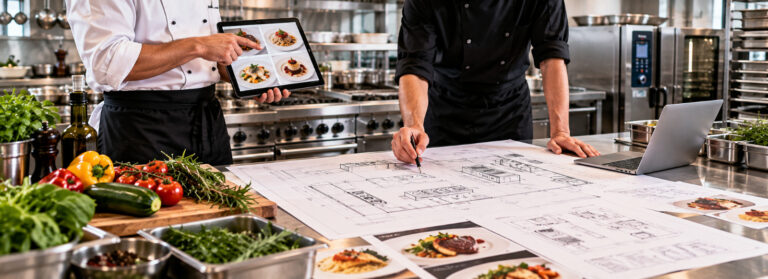
Each dish should be mapped through production:
preparation → equipment → storage → cooking → finishing → plating.
This reveals potential conflicts before service begins.
Special menus concentrate demand
This is particularly important for events.
On a normal evening, orders may be distributed across many dishes.
A fixed Halloween menu can concentrate demand into a small number of preparations.
Suddenly one oven, one pasta station or one plating area may need to support a large percentage of the dining room.
The kitchen should prepare for concentration, not only total covers.
Fresh pasta is particularly effective for autumn storytelling
Filled pasta provides an ideal structure for seasonal ingredients.
Pumpkin is an obvious example.
Depending on production volume, professional pasta preparation may involve:
- mixers;
- dough sheeters;
- fresh-pasta machines;
- bowl cutters for suitable filling preparations;
- refrigeration.
The exact equipment depends on the production system.
Refrigeration remains behind the scenes — but essential
Special events often increase mise en place.
More components mean more containers, more prepared ingredients and potentially greater pressure on refrigerated storage.
The menu should therefore be evaluated not only according to cooking capacity but also according to the space required before service.
Beware of the “Instagram dessert”
A dessert can look spectacular in one carefully prepared photograph and become impossible when forty portions need to leave the kitchen.
This is a common tension in modern restaurant marketing.
Visual impact matters.
But the dish must remain executable.
The plating procedure should be tested at realistic volume.
If one portion requires several minutes of intricate decoration, the kitchen needs to understand what happens during peak service.
Cost every decorative component
Special-event dishes often accumulate small extras.
Sauces.
Powders.
Decorations.
Garnishes.
Special ingredients.
Individually, they may appear inexpensive.
Across a full service, they can change the food cost significantly.
Seasonal creativity should therefore be costed with the same discipline as the regular menu.
Forecasting becomes valuable
Reservations provide useful production information.
If the restaurant knows how many guests are expected and how many will order the special menu, purchasing and preparation can become more accurate.
This can reduce both shortages and unnecessary production.
The marketing strategy and the kitchen strategy should therefore communicate.
Chef Costantino’s Halloween interpretation
Pumpkin and Amaretti Ravioli with Sage Butter
The dish demonstrates how Halloween can be expressed without sacrificing Italian culinary identity.
Pumpkin provides the seasonal connection.
Amaretti introduce sweetness and aromatic complexity.
Sage butter keeps the preparation recognisable.
Remove the word “Halloween” and the dish still makes sense.
That is exactly why it works.
Theme should amplify food, not replace it
Halloween can bring customers through the door.
The restaurant still has to give them a reason to return.
Atmosphere creates curiosity.
Presentation creates photographs.
But flavour, service and consistency create reputation.
Professional equipment focus: fresh-pasta equipment, bowl cutters, cooking equipment and commercial refrigeration according to the selected menu and production system.
TAGS
Halloween restaurant menu, Halloween foodservice, seasonal restaurant menu, pumpkin ravioli, autumn menu, restaurant events, commercial kitchen, fresh pasta equipment, commercial refrigeration, restaurant marketing, food cost, foodservice, HoReCa
Sull'autore