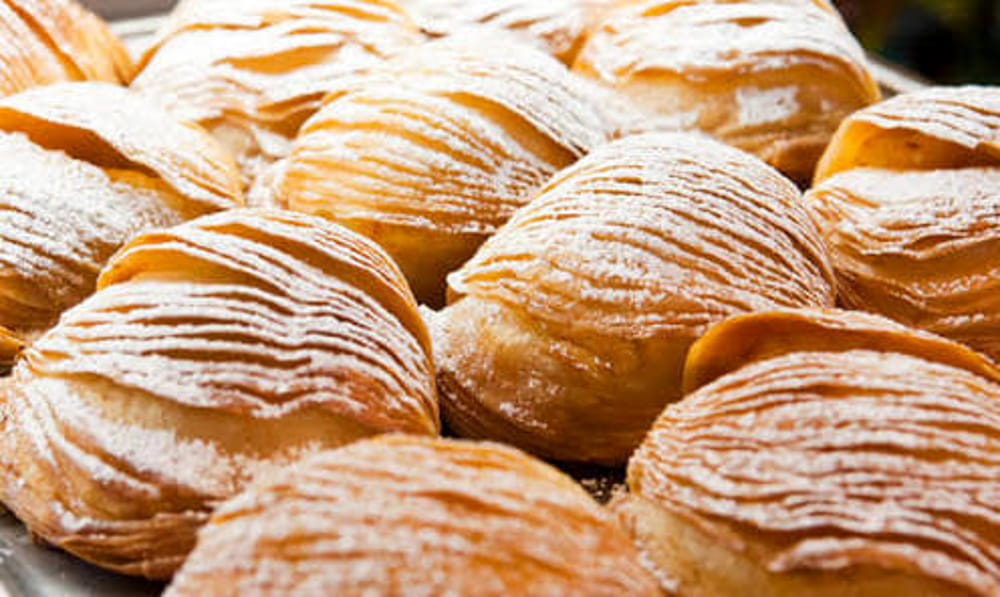
The Neapolitan sfogliatella is one of the iconic sweets of Naples, famous worldwide for its distinctive shell shape, flaky layers, and rich, aromatic filling. Behind this beloved pastry lies a history rooted in 17th-century Neapolitan convents, built on craftsmanship, family secrets, and a passion for fine pastry.
📜 Historical Origins
- The sfogliatella likely originated in the Santa Rosa convent in Conca dei Marini, near Amalfi, around the 17th century.
- The nuns initially prepared a pastry filled with semolina, ricotta, candied fruits, and aromatic spices, wrapped in extremely thin layers of dough.
- Later, the sweet reached Naples, where it was refined and widely appreciated by nobles and the bourgeoisie.
🥐 Types of Sfogliatella
There are two main varieties today:
- Sfogliatella riccia: characterized by very thin layers of pastry creating a shell-like, crispy texture.
- Sfogliatella frolla: uses a softer, shortcrust-like dough, ideal for those who prefer a less crunchy but equally flavorful pastry.
Traditional Fillings
- Classic: ricotta, semolina, sugar, citrus zest, and cinnamon.
- Modern variations: pastry cream, chocolate, pistachio, or mixed berries.
🏛 Curiosities and Spread
- The pastry gained nationwide fame in the 19th century, with historic pastry shops in Naples becoming reference points for the sfogliatella.
- Often served at breakfast or as a take-away treat, it symbolizes Neapolitan culture and artisanal skill.
- Traditional preparation requires professional equipment, such as mixers and dough sheeters, to achieve extremely thin and uniform layers.
🍴 Professional Preparation
In pastry kitchens, making sfogliatella requires:
- Professional mixers to create elastic and homogeneous dough.
- Manual or automatic dough sheeters to stretch dough into thin layers without tearing.
- Professional ovens to bake evenly while maintaining the crispness of the layers.
🏁 Conclusion
The Neapolitan sfogliatella is more than just a sweet; it is a culinary and cultural heritage of Campania. Its history, rooted in convents, craftsmanship, and passion, continues today thanks to pastry chefs and professionals who preserve the tradition, keeping the excellence of Neapolitan sweetness alive.
Sull'autore