Discovering gluten-free desserts: alternative flours and techniques for perfect doughs

In recent years, gluten-free desserts have gained an increasingly important role in professional pastry and foodservice. They are no longer just a necessity for food intolerances, but a real opportunity to expand menu offerings and respond to growing demand.
Producing high-quality gluten-free products requires a specific technical approach, a solid understanding of ingredients and the use of professional equipment. Preparing gluten-free dough is not simply about replacing traditional flour with an alternative: gluten-free flours behave differently, especially in terms of liquid absorption and structural capacity. For this reason, it is essential to carefully balance all ingredients to achieve the right consistency, workability and final result.
For professional kitchen and pastry equipment visit:
https://www.ristorazione-refrigerazione.it/
Alternative flours for gluten-free baking
To create balanced gluten-free desserts, bakers often use blends of flours and starches to compensate for the absence of gluten and achieve a stable structure.
Common gluten-free flours include:
rice flour, light and neutral
corn flour
buckwheat flour
almond flour or other nut flours
corn starch or potato starch
quinoa flour or teff flour
Each flour has specific characteristics and must be dosed according to the type of dessert. The key is finding the right balance between flours, starches and liquids.
Binders and thickeners in gluten-free dough
Without gluten, additional ingredients are needed to provide structure and cohesion. Natural binders improve dough handling and stability during baking.
Common options include:
xanthan gum
guar gum
psyllium
ground flaxseed
functional starches
These ingredients help improve:
dough structure
final texture
baking stability
softness of the finished product
Quantities must be carefully balanced, as excessive use can make the dough too dense or sticky.
The importance of hydration
Gluten-free flours absorb more liquid than traditional flours, making hydration a key factor. A well-hydrated dough is easier to work with and ensures even baking.
Proper liquid management helps:
improve texture
prevent dry or crumbly results
promote even baking
extend shelf life
The balance between dry ingredients and liquids must be adapted to the flour blend and the type of dessert being prepared.
Why professional equipment makes a difference
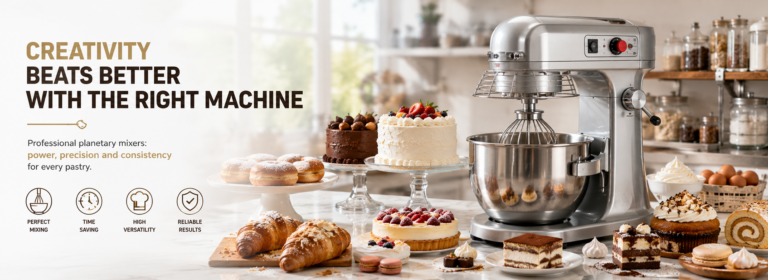
To work effectively with gluten-free flours and achieve consistent results, using professional equipment is essential. A high-quality mixer allows for uniform blending and more stable doughs.
Professional tools allow you to:
handle higher hydration doughs
achieve homogeneous mixtures
reduce processing errors
improve final structure
ensure consistent results over time
In professional production, precision is crucial, and the right equipment helps maintain high standards.
Explore professional pastry equipment:
https://www.ristorazione-refrigerazione.it/
Choosing the right gluten-free flour blend
The choice of flour always depends on the product being made. There is no universal blend suitable for all desserts.
It is important to:
evaluate flour absorption
balance dry and wet ingredients
use appropriate binders
test different combinations
adapt techniques to each dough
Experimentation is part of the process and helps identify the ideal mix for excellent results.
Examples of gluten-free desserts
With the right techniques and ingredients, it is possible to produce a wide range of high-quality gluten-free products:
soft cakes
loaf cakes
cookies
tarts
muffins
brownies
baked desserts
gluten-free sweet breads
When properly balanced and produced with professional tools, these products can reach quality levels comparable to traditional pastry.
Quality and technique for professional results
Making gluten-free desserts requires attention, expertise and the right tools. Balancing alternative flours, hydration and binders is essential for achieving workable dough and high-quality finished products.
Using professional equipment and selected ingredients improves production efficiency and expands menu offerings. Gluten-free desserts are a rapidly growing segment and a real opportunity to stand out in the market.
With the right technique and careful ingredient selection, it is possible to offer delicious, safe and increasingly appreciated products for customers focused on quality and dietary needs.
Sull'autore