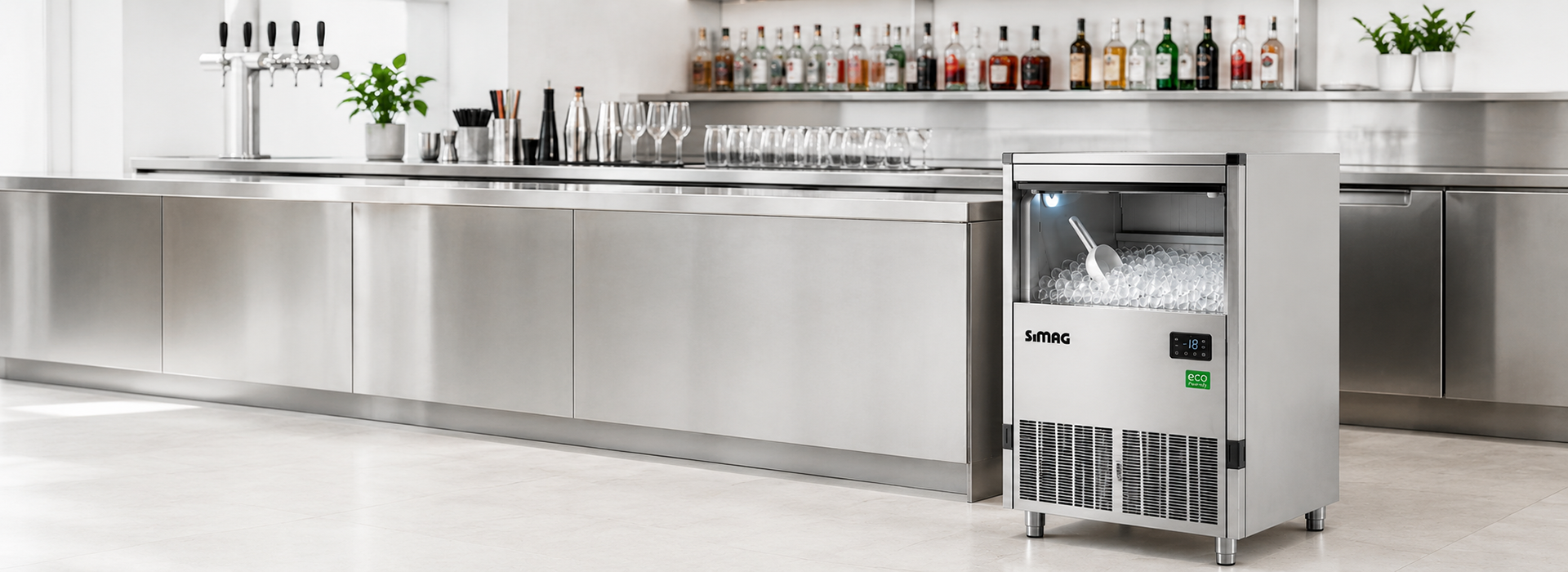
Ice is often treated as a simple finishing touch, but in professional foodservice it is an essential ingredient.
Whether you’re serving premium cocktails, chilled soft drinks, seafood or buffet presentations, the quality and consistency of your ice directly affects customer satisfaction.
Choosing the right commercial ice maker means much more than selecting a machine based on daily production.
Ice type, storage capacity, energy efficiency, water quality and maintenance all play a major role in long-term performance.
This guide explains everything foodservice professionals should consider before investing in a commercial ice machine.
Why Ice Quality Matters
Professional bartenders know that ice is part of the recipe.
Poor-quality ice melts quickly, dilutes drinks and affects presentation.
High-quality ice cools beverages efficiently while maintaining flavour balance and visual appeal.
For restaurants and hotels, reliable ice production also improves workflow during busy service periods.
Different Types of Ice
Every business has different requirements.
Full Cube Ice
Large, dense cubes melt slowly.
Ideal for:
- cocktails;
- spirits;
- premium beverages;
- table service.
Hollow Cube Ice
Produces quickly and efficiently.
Perfect for:
- cafés;
- quick-service restaurants;
- soft drinks;
- high-volume beverage service.
Nugget Ice
Soft, chewable and highly popular for soft drinks, smoothies and healthcare facilities.
Excellent for self-service beverage stations.
Flake Ice
Widely used for:
- seafood displays;
- food presentation;
- supermarkets;
- fish markets;
- buffet counters.
How Much Ice Do You Need?
One of the most common purchasing mistakes is underestimating daily demand.
Consider:
- number of customers;
- beverage sales;
- seasonal peaks;
- hotel occupancy;
- catering events;
- future business growth.
Choosing the correct production capacity helps prevent shortages during peak hours.
Air-Cooled vs Water-Cooled
Air-Cooled Machines
Most popular solution.
Benefits include:
- lower water consumption;
- easier installation;
- reduced operating costs;
- environmentally friendly operation.
Require adequate ventilation.
Water-Cooled Machines
Recommended when:
- ambient temperatures are consistently high;
- ventilation is limited;
- maximum production is required.
Although efficient in hot environments, they consume more water.
Water Quality
The quality of water directly affects both the appearance of the ice and the lifespan of the machine.
Hard water encourages limescale formation, reducing efficiency and increasing maintenance costs.
Water filtration systems are strongly recommended for most commercial installations.
Cleaning and Maintenance
Regular maintenance ensures consistent ice quality and extends equipment life.
Daily cleaning should include:
- storage bin sanitation;
- surface cleaning;
- scoop hygiene.
Scheduled maintenance should include:
- condenser cleaning;
- descaling;
- water filter replacement;
- system inspection.
Food Safety
Ice intended for consumption is classified as food.
Businesses should always follow HACCP procedures by:
- using potable water;
- storing ice hygienically;
- avoiding hand contact;
- cleaning storage bins regularly;
- using dedicated ice scoops.
These simple procedures help maintain safe, high-quality ice production.
Expert Advice
Don’t buy an ice machine based solely on today’s demand.
Think about where your business will be in three to five years.
A slightly larger machine often proves to be a better long-term investment than replacing an undersized unit after only a short period.
Frequently Asked Questions
How much ice does a restaurant need?
It depends on customer numbers, beverage sales and menu type.
Most restaurants should calculate production based on peak daily demand rather than average consumption.
Which type of ice is best for cocktails?
Full cube ice is generally preferred because it melts slowly and preserves drink quality.
How often should an ice machine be cleaned?
Food contact surfaces should be cleaned daily, while deep cleaning and descaling should follow the manufacturer’s maintenance schedule.
Do I need a water filter?
In most commercial environments, yes.
Water filtration improves ice quality while reducing limescale and extending machine lifespan.
Conclusion
A commercial ice maker is one of the hardest-working pieces of equipment in any hospitality business.
Choosing the correct model improves efficiency, enhances drink quality and ensures reliable service throughout the day.
By evaluating production capacity, ice type, water quality and maintenance requirements, businesses can make an investment that delivers value for years to come.
Recommended Internal Links
- Commercial Refrigeration
- Bar Equipment
- Slush Machines
- Refrigerated Display Cabinets
- Beverage Equipment
Explore our range of commercial ice makers designed for bars, restaurants, hotels and catering businesses.
Find reliable, energy-efficient solutions that deliver consistent ice production and support professional beverage service.
Sull'autore