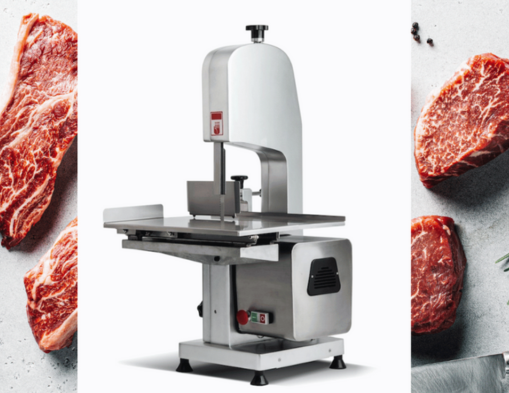

In the butchery, gastronomy, and food processing sectors, the professional bone saw is an essential piece of equipment. This machine allows you to cut bones, frozen meat, and large portions with precision, safety, and speed. Choosing the right bone saw means improving productivity, ensuring consistent cuts, and maintaining the hygiene and safety standards required in professional food environments.
⚙️ What Is a Professional Bone Saw
A professional bone saw is a machine equipped with a stainless steel band blade that moves at high speed to make clean and accurate cuts. It is built to withstand intensive, continuous use while guaranteeing reliability and safety. Modern models feature stainless steel structures, powerful motors, and advanced safety systems that minimize the risk of accidents during operation.
🥩 Where the Bone Saw Is Used
The bone saw is used across multiple professional contexts:
- 🥩 Butcher shops: for cutting meat quarters, ribs, and bones with precision.
- 🍖 Food labs and delicatessens: for processing frozen or bone-based products.
- 🧊 Catering and industrial kitchens: for preparing specific meat cuts or handling frozen goods.
- 🏭 Food processing industries: for large-scale meat cutting and portioning.
🧰 Main Features
A high-quality bone saw must combine durability, performance, and safety. The most important features to consider include:
- ⚡ Powerful motor: ensures steady cutting speed, even with hard bones or frozen meat.
- 🧲 Stainless steel frame: provides hygiene, corrosion resistance, and easy cleaning.
- 🔪 Tempered steel band blade: enables sharp, uniform cuts and long-lasting performance.
- 🛡️ Safety systems: such as blade guards, emergency stop buttons, and automatic safety locks.
- 📏 Adjustable worktable: allows the operator to control the thickness of each cut precisely.
🧼 Maintenance and Safety
Proper maintenance ensures both efficiency and operator safety.
- 🔧 Daily cleaning: remove meat and bone residues after each use with food-safe detergents.
- ⚙️ Blade inspection: regularly check tension and sharpness to prevent vibrations or uneven cuts.
- 🧤 Safe operation: always wear protective gloves and follow the manufacturer’s safety instructions.
Routine maintenance not only improves cutting performance but also ensures compliance with hygiene and food safety regulations.
🏁 Conclusion
The professional bone saw is an indispensable tool for anyone working in butcher shops, food laboratories, or the catering industry. With its precision, power, and advanced safety features, it allows professionals to optimize meat processing operations efficiently and safely. Choosing a reliable model means investing in quality, hygiene, and long-term safety — essential values for every modern food professional.
Sull'autore