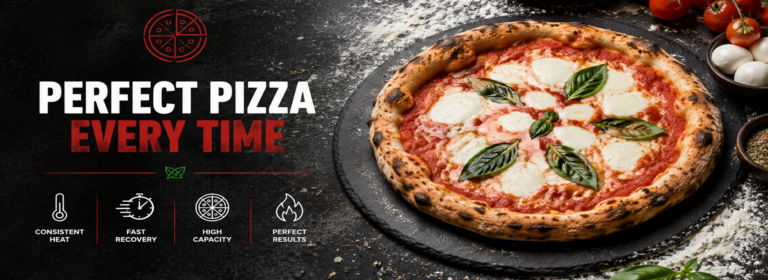
A commercial pizza oven can become one of the most productive appliances in a restaurant, pub, hotel, bakery or fast-casual operation. However, successful pizza production depends on more than achieving a high chamber temperature.
Oven capacity, heat recovery, deck material, independent heat control, energy supply and workstation layout all influence how many pizzas can be produced and how consistent they remain during peak service.
The correct oven should match the pizza style, diameter, cooking time and hourly demand. It must also integrate with dough storage, refrigerated toppings, stretching, loading, finishing and order dispatch.
Begin with the Product
Before comparing equipment, the business should define exactly what it intends to bake.
The list may include:
- traditional round pizza;
- contemporary pizza;
- thin-crust pizza;
- pizza by the slice;
- tray-baked pizza;
- focaccia;
- flatbreads;
- bakery products.
Each style may require a different chamber height, deck temperature, upper-heat intensity and cooking time.
An oven designed primarily for round pizza may use a relatively low chamber and a refractory deck. A business producing focaccia and tray-baked products may require more internal height and flexibility.
Selecting equipment before defining the product can lead to a chamber that is too small, too high or difficult to control for the actual menu.
Calculate Peak-Hour Demand
Average daily sales do not provide enough information to size the oven.
Production should be calculated according to the busiest hour. The assessment should include:
- maximum pizzas ordered;
- pizza diameter;
- pizzas loaded simultaneously;
- average cooking time;
- loading and unloading time;
- need for rotation;
- takeaway and delivery demand;
- other products using the oven.
A chamber may physically hold six pizzas, but the operator must still have enough room to position the peel, rotate each pizza and remove finished products.
The maximum stated capacity should therefore be treated as a physical measurement rather than a guaranteed hourly output.
Theoretical and Sustainable Output
Theoretical output is often calculated by multiplying chamber capacity by the number of cooking cycles possible within one hour.
Actual production is lower because the process also includes:
- door opening;
- temperature recovery;
- topping differences;
- rotation;
- order coordination;
- deck cleaning;
- loading delays;
- finishing after baking.
Sustainable output is the number of pizzas the oven and staff can produce repeatedly without reducing quality.
An appliance that completes one fully loaded cycle successfully may not maintain the same result through an extended rush period.
Electric Pizza Ovens
Electric pizza ovens use heating elements above and below the chamber.
Independent control of upper and lower heat allows the operator to adjust the balance between the crust, toppings and base.
Before purchasing, confirm:
- voltage;
- frequency;
- connected load;
- single-phase or three-phase supply;
- maximum current requirement;
- connection type;
- electrical-panel capacity;
- simultaneous demand from other kitchen equipment.
Larger commercial models often require a three-phase supply.
The electrical system should be evaluated before the oven is ordered. Selecting a powerful appliance is ineffective if the premises cannot provide the necessary connection.
Gas Pizza Ovens
Gas ovens may be configured for natural gas or LPG, depending on the model.
The installation must consider:
- gas type;
- supply pressure;
- heat output;
- ventilation;
- combustion-product removal;
- flue route;
- extraction;
- position of the isolation valve.
Connection, commissioning and gas conversion require qualified personnel.
A gas oven may integrate effectively into a cooking line that already has a suitable gas supply and extraction system.
Refractory Decks
A refractory deck stores energy and transfers it directly to the pizza base.
Its characteristics influence:
- colour;
- texture;
- moisture evaporation;
- crust development;
- cooking speed;
- recovery between loads.
A deck that is too hot can burn the base before the toppings and crust are ready. A deck with insufficient energy produces a pale base and can extend the cooking time.
Deck material, thickness and lower-heat power should match the dough hydration, pizza style and expected cycle.
Independent Upper and Lower Heat
Upper heat acts primarily on the toppings and exposed crust, while lower heat cooks the base.
Independent adjustment allows the oven to manage:
- thin pizza;
- contemporary pizza;
- focaccia;
- tray-baked products;
- moist toppings;
- full and partial chamber loads.
There is no universal setting suitable for every recipe. Each business should test and record the correct balance.
Repeatedly changing settings in response to individual pizzas can make the oven unstable. Adjustments should be gradual and based on consistent observations.
Single-Chamber Ovens
A single chamber may be suitable for a small pizzeria, a restaurant with a limited pizza menu or a business with moderate demand.
Possible advantages include:
- smaller footprint;
- lower total connected load;
- straightforward operation;
- lower initial investment;
- simpler installation.
The chamber must still support the busiest period.
If pizza, focaccia and tray-baked products require different temperatures, one chamber may create scheduling difficulties during service.
Twin-Chamber Ovens
Two independent chambers provide additional capacity and flexibility.
They can be used to:
- increase hourly output;
- operate at different temperatures;
- separate round pizza and tray products;
- activate one chamber during quiet periods;
- manage takeaway orders;
- provide reserve capacity.
The total energy requirement must be calculated with both chambers operating simultaneously.
The upper chamber must also remain at a safe and practical loading height.
Modular and Stackable Configurations
Some ovens allow a second compatible chamber to be added later.
This option can support a growing business, allowing production capacity to increase without replacing the original unit.
Stacking must be approved by the manufacturer. The installation must verify:
- total weight;
- support;
- stability;
- connections;
- heat dissipation;
- ventilation;
- service access;
- working height.
Independent ovens should not be stacked without a specifically designed support and authorised configuration.
Chamber Dimensions
The internal dimensions must correspond to the real pizza diameter.
Usable space should allow the operator to:
- position every pizza;
- insert the peel;
- rotate products;
- maintain separation;
- remove one pizza without disturbing the others.
The door opening should also be checked. A chamber may be large enough internally but difficult to load if the opening is unsuitable for large pizzas or trays.
Chamber Height
A low chamber concentrates heat and may respond effectively to direct-deck round pizza.
A taller chamber provides greater flexibility for focaccia, trays and products requiring additional vertical space.
Extra height is not automatically an advantage. A larger internal volume may require more energy and may change the balance of the bake.
The chamber should be selected according to the main production rather than occasional products.
Heat Recovery During Service
Every opening and every pizza loaded removes energy from the oven.
When the deck loses too much heat:
- bases become paler;
- cooking times increase;
- orders begin to accumulate;
- texture changes;
- hourly output decreases.
Power, insulation and refractory mass influence recovery.
The oven should be tested or assessed according to repeated loads, not solely by its maximum temperature or performance with one pizza.
Positioning the Oven
The oven should form part of a direct production route.
It needs a logical relationship with:
- dough-ball storage;
- refrigerated preparation counter;
- topping containers;
- stretching bench;
- pizza peels;
- cutting area;
- finishing station;
- collection or dispatch point.
The operator should have enough space in front of the oven to use the peel without crossing other staff routes.
A badly positioned oven increases handling time and creates unnecessary safety risks.
Refrigerated Preparation Counter
The preparation counter should hold toppings at the correct temperature and provide rapid access.
Containers should be filled with quantities that reflect service volume. Overfilled pans can make stock rotation and temperature control more difficult.
Ingredients should be:
- labelled;
- portioned;
- protected;
- separated according to allergens;
- positioned in a logical order;
- prepared for a short cooking cycle.
Mozzarella, vegetables and preserved ingredients should be drained when necessary to control moisture.
Dough Stretching Station
The stretching bench should be close to the oven but protected from excessive heat that could affect the dough balls.
The station needs:
- controlled flour or semolina;
- dough scrapers;
- dough-ball containers;
- enough space for the required diameter;
- rapid access to toppings;
- frequent cleaning.
Excess flour may help the pizza move initially, but it falls onto the deck and burns.
The operator should use the minimum quantity required for clean handling.
Pizza Peels and Tools
The loading peel must match both the pizza diameter and the oven opening.
A smaller turning peel may be required to rotate and remove pizzas.
Tools should remain:
- clean;
- dry;
- free from burnt residues;
- easily accessible;
- protected from contamination;
- in good condition.
A warped or oversized peel can slow down loading and damage the pizza.
Preheating and Start-Up
The oven needs enough time for the chamber and deck to reach thermal stability.
The temperature shown on the display does not necessarily mean that the complete refractory mass is ready.
The operating procedure should establish:
- start-up time;
- preheating duration;
- initial settings;
- test pizza;
- conditions required before service.
Beginning too early causes the first pizzas to bake differently from those produced later.
Managing Topping Moisture
Very moist toppings can release water and reduce the quality of the bake.
Mozzarella, mushrooms, vegetables and preserved ingredients may need to be:
- drained;
- dried;
- precooked;
- grilled;
- cooled;
- portioned;
- added after baking.
Every topping should be prepared for the short time available inside the oven.
Standard weights help prevent one pizza from baking differently from another.
Time Between Topping and Loading
A topped pizza should not remain on the bench or peel for an extended period.
Tomato, mozzarella and other ingredients transfer moisture to the dough and can make the base stick.
An efficient sequence is:
- stretch the dough;
- transfer it to the correct surface;
- apply toppings quickly;
- check that the oven is ready;
- load immediately.
Preparing too many pizzas in advance can create delays and damage the final items in the queue.
Mapping the Chamber
Static ovens can contain areas that behave differently.
The operator should identify:
- hotter sections;
- cooler areas near the door;
- deck-temperature variations;
- upper-heat distribution;
- recovery after loading.
This information allows pizzas to be positioned strategically.
Products that need more colour can be moved into a stronger area, while delicate pizzas may require a more moderate position.
Rotating Pizzas
Rotation can compensate for differences in the chamber.
The base must first develop enough structure to be lifted without tearing or losing toppings.
The correct time to rotate depends on:
- dough hydration;
- pizza thickness;
- temperature;
- topping weight;
- deck behaviour;
- peel type.
The movement should be fast to limit door opening and heat loss.
Managing Two Chambers
Two chambers can be organised in different ways:
- one for round pizza;
- one for trays and focaccia;
- two distinct temperatures;
- primary and support chambers;
- progressive activation as demand increases.
Each chamber should have its own operating parameters.
The upper and lower units may behave differently because of position, opening frequency and loading patterns.
Extraction and Ventilation
Pizza ovens generate a significant amount of heat and vapour. Gas models also produce combustion gases.
The installation should confirm:
- hood requirements;
- flue route;
- air replacement;
- surrounding temperature;
- clearance from sensitive materials;
- maintenance access;
- compatibility with nearby refrigeration equipment.
Insufficient ventilation makes the working environment uncomfortable and can affect appliance performance.
Oven Stand and Working Height
The stand must support the oven’s full weight and resist heat.
The working height should allow the operator to see inside the chamber and control the peel safely.
For twin-chamber models, the top chamber should not be so high that the operator loses visibility or control.
Storage beneath the oven should only be used when permitted and should not obstruct ventilation or technical access.
Daily Cleaning
Cleaning should follow the manufacturer’s instructions and begin only when the appliance reaches the specified safe condition.
The procedure may include:
- removing deck residues;
- brushing the chamber;
- cleaning the door and glass;
- wiping external panels;
- inspecting seals;
- clearing ventilation openings;
- removing flour from beneath and around the oven.
Water and chemicals should not be applied to a hot refractory deck unless specifically authorised.
Peels, brushes and trays should be cleaned separately.
Preventive Maintenance
Regular maintenance supports consistent temperature control and safe operation.
Checks should include:
- heating elements;
- burners;
- thermostats;
- probes;
- controls;
- cables and connections;
- doors and hinges;
- seals;
- lights;
- refractory-deck condition;
- ventilation;
- safety devices.
Longer heating times, temperature differences or sudden changes in baking quality should be investigated by qualified personnel.
Standardising Each Pizza
Every pizza should have a production sheet containing:
- dough-ball weight;
- diameter;
- hydration;
- tomato quantity;
- mozzarella quantity;
- other topping weights;
- upper-heat setting;
- lower-heat setting;
- chamber position;
- cooking time;
- rotation;
- finishing;
- allergens.
Standardisation helps staff reproduce the same result and supports food-cost control.
Coordinating Orders
The oven must be coordinated with the ordering system.
Production should account for:
- pizzas belonging to the same table;
- similar cooking times;
- post-bake finishing;
- takeaway;
- deliveries;
- special requests;
- allergens.
The objective is to complete all pizzas for one order together without leaving finished products waiting.
Selecting the Correct Commercial Pizza Oven
Before purchasing, confirm:
- pizza style;
- real diameter;
- peak-hour demand;
- cooking time;
- chamber capacity;
- heat-recovery performance;
- electric or gas supply;
- available connected load;
- single or twin chambers;
- refractory-deck configuration;
- independent top and bottom control;
- internal height;
- installation space;
- extraction and ventilation;
- potential production growth.
The correct oven is the model that provides sufficient sustainable capacity while fitting the kitchen’s utilities, space and workflow.
The selection of commercial pizza ovens available from Ristorazione-Refrigerazione includes electric and gas models, single- and twin-chamber configurations, different capacities and solutions for pizzerias, restaurants, pubs and commercial food-service operations.
Sull'autore