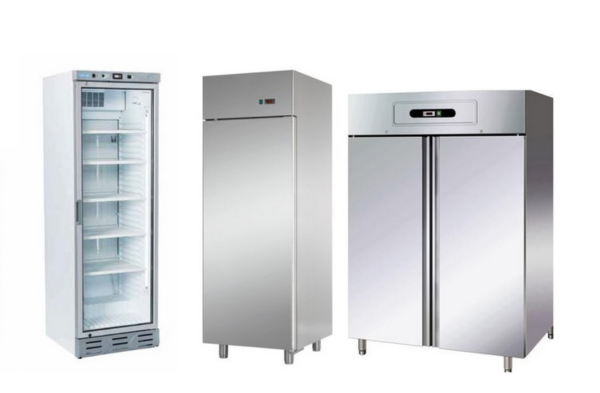
Professional refrigerators are essential equipment for ensuring optimal food storage, safety, and operational efficiency in commercial kitchens. Choosing the right refrigerator depends on the type of business, workload, and the types of food to store.
⚙️ Materials and Construction
Professional refrigerators are distinguished by high-quality materials:
- Stainless steel interior and exterior: provides maximum hygiene, durability, and easy cleaning, ideal for high-intensity kitchens.
- Stainless steel exterior and food-grade plastic interior: combines external strength with lightweight interior, suitable for medium-traffic environments and standard storage.
- Materials must be certified for food use, corrosion-resistant, and able to withstand high cleaning temperatures.
❄️ Positive and Negative Refrigerators
- Positive refrigerators: maintain temperatures between 0°C and +10°C, ideal for vegetables, dairy, fresh meat, and beverages. Widely used in professional kitchens, bars, restaurants, and pizzerias.
- Negative refrigerators (freezers): maintain temperatures below 0°C, from -18°C to -22°C, necessary for freezing products, ice cream, fish, and frozen ingredients. Essential in pastry shops, seafood restaurants, and catering businesses.
💨 Ventilated or Static Refrigerators
- Ventilated refrigerators: cold air is circulated by internal fans, ensuring even temperature distribution and rapid cooling. Ideal for busy kitchens or multi-level storage.
- Static refrigerators: cooling occurs naturally without forced air, preserving moisture and making them ideal for vegetables, fruits, and delicate foods.
🏢 Types for Different Foodservice Businesses
- Restaurants and pizzerias: ventilated positive refrigerators with single or multiple doors, adjustable shelves, and stainless steel interiors. Efficient for storing fresh ingredients ready for use.
- Bars and cafés: compact models, often with plastic interiors, sufficient for beverages, milk, and fresh snacks.
- Catering and delicatessen kitchens: large-capacity refrigerators and freezers, ventilated, with temperature control for various types of food.
- Pastry shops and gelaterias: negative and combination refrigerators, essential for storing creams, chocolate, and frozen dough, with removable shelves and optimal space management.
- Hotels and canteens: multi-door, large-capacity refrigerators, often modular, to handle high volumes of fresh and frozen products.
🧑🍳 Other Important Features
- Number of doors: multiple doors allow better food organization, avoid cross-contamination, and increase efficiency.
- Size and internal capacity: must match the business’s workflow and storage needs.
- Defrost system: automatic or manual, important for reducing maintenance time and maintaining energy efficiency.
- Temperature control: electronic controls allow precise and stable temperature, avoiding waste and product spoilage.
- Wheels and mobility: useful for cleaning and reorganizing the kitchen.
🧊 Conclusion
Choosing the right professional refrigerator means balancing high-quality materials, adequate capacity, cooling type, and specific functionalities for the type of foodservice business. From pizzerias to gourmet restaurants, bars to pastry shops, there are solutions designed to ensure hygiene, efficiency, and optimal food preservation.
Sull'autore