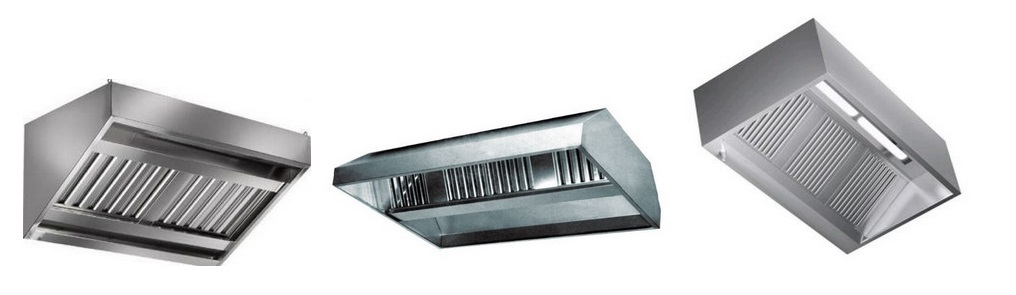
Professional extraction systems are essential components in every commercial kitchen, ensuring safety, hygiene, and air quality. Their main purpose is to remove fumes, vapors, odors, and grease generated during cooking, maintaining a clean and comfortable working environment in compliance with safety regulations.
🧰 Main Components of an Extraction System
A professional extraction system generally includes:
- Extractor hood, which captures fumes directly above the cooking equipment.
- Ductwork or piping, which channels the extracted air toward the outside or to the filtration unit.
- Extraction motor, which generates the airflow needed to remove the air efficiently.
- Filters, which trap grease particles, vapors, and odors before the air is released or recirculated.
🔩 Types of Professional Hoods
Professional extraction hoods vary in structure and function:
- Wall-mounted hoods: installed against the wall, ideal for linear kitchen setups.
- Island hoods: positioned above central cooking blocks, commonly used in large or open-view kitchens.
- Built-in motor hoods: equipped with an integrated extraction motor, offering a compact and easy-to-install system.
- External motor-ready hoods: designed for connection to an external motor, ideal when reduced noise or higher extraction power is needed.
⚙️ Types of Motors and Extraction Units
Extraction motors can be:
- Internal, integrated within the hood: easier to install but generally noisier.
- External, installed outside the building or on the roof: provide greater power and lower noise levels, perfect for large kitchens or those with heavy-duty cooking activity.
Some hoods feature multi-stage filtration systems, such as:
- Metal grease filters, washable and essential for trapping grease particles.
- Activated carbon filters, which neutralize odors and are ideal for systems without a flue.
🏢 Solutions for Kitchens Without a Flue
In some establishments, such as small restaurants, cafés, or bistros located in historic centers or shared buildings, installing a flue is not possible. In these cases, the best solution is a professional hood with activated carbon filters.
These hoods purify the extracted air and neutralize odors, ensuring a clean and comfortable working environment even without external ventilation.
The main advantages of hoods with activated carbon filters include:
- No need for a flue system.
- Easier and more flexible installation.
- Significant odor reduction.
- Energy efficiency and environmental sustainability.
- Possibility to modify or relocate the kitchen layout easily.
🔧 Maintenance and Safety
A proper extraction system must be regularly cleaned and maintained to ensure safety and optimal performance. Filters should be washed or replaced periodically, and the motor should be inspected to guarantee efficient airflow.
💡 Conclusion
Choosing the right extraction system depends on the size of the kitchen, cooking style, available space, and feasibility of installing a flue. Whether opting for an external motor hood or an activated carbon filtering system, a well-designed extraction setup guarantees hygiene, safety, and comfort — key elements in every professional kitchen.
Sull'autore